

Touchpoints Sleep Neurostimulator for Sleep Improvement

What are TouchPoints?
TouchPoints are non-invasive neuroscientific wearable devices that use patent pending BLAST technology to relieve stress in as few as 30 seconds.
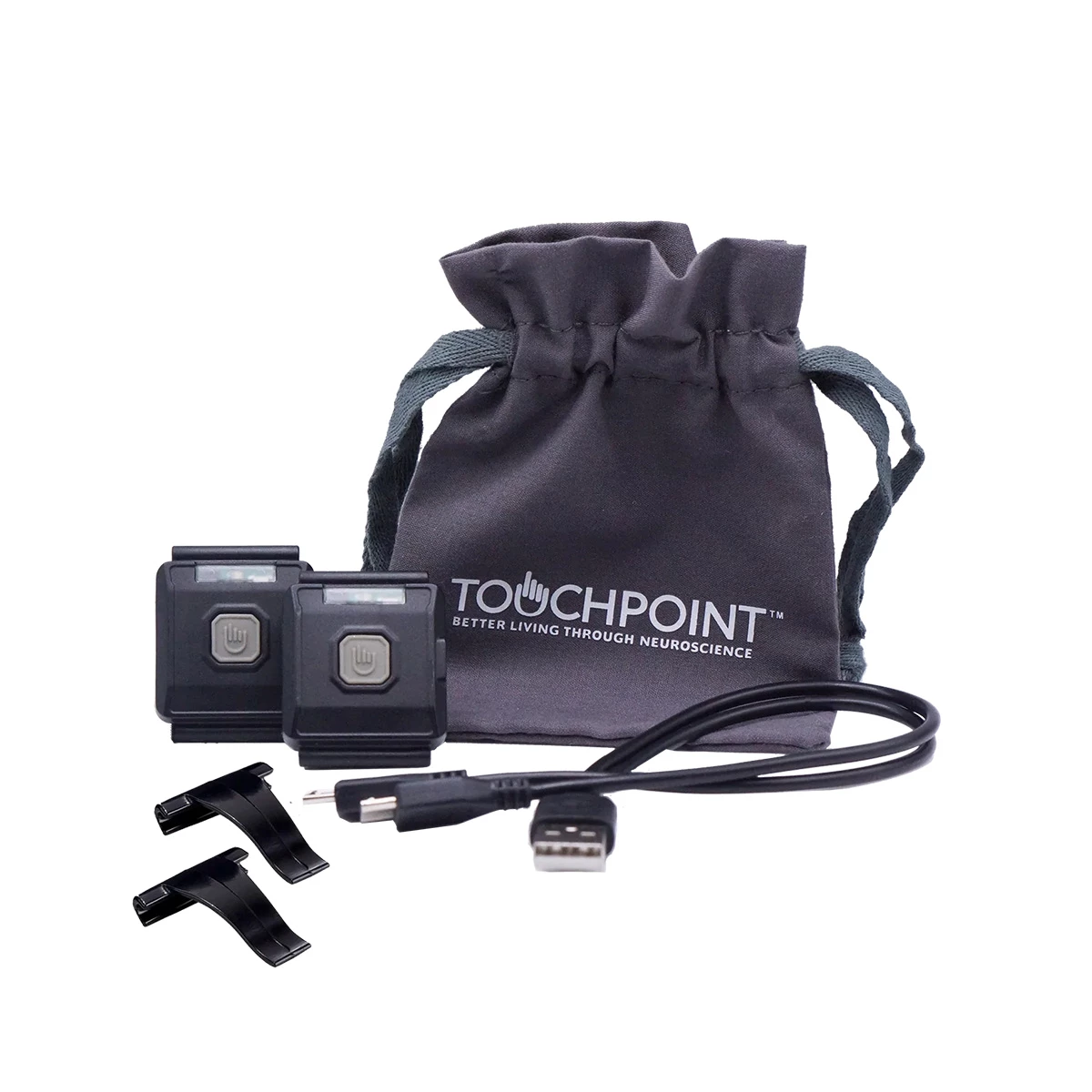
TouchPoints neuro stimulator for sleep consists of
- 2x TouchPoints Basic (without wrist armband)
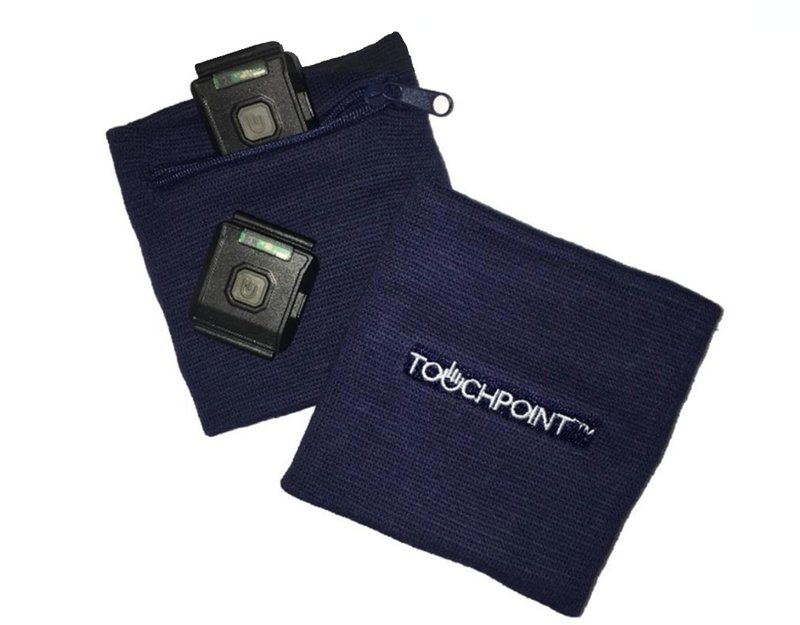
- 2x Zippered sweatbands
- 1x Dual-pronged charging cable
- Linen carrybag
- 1 year limited manufacturer's warranty
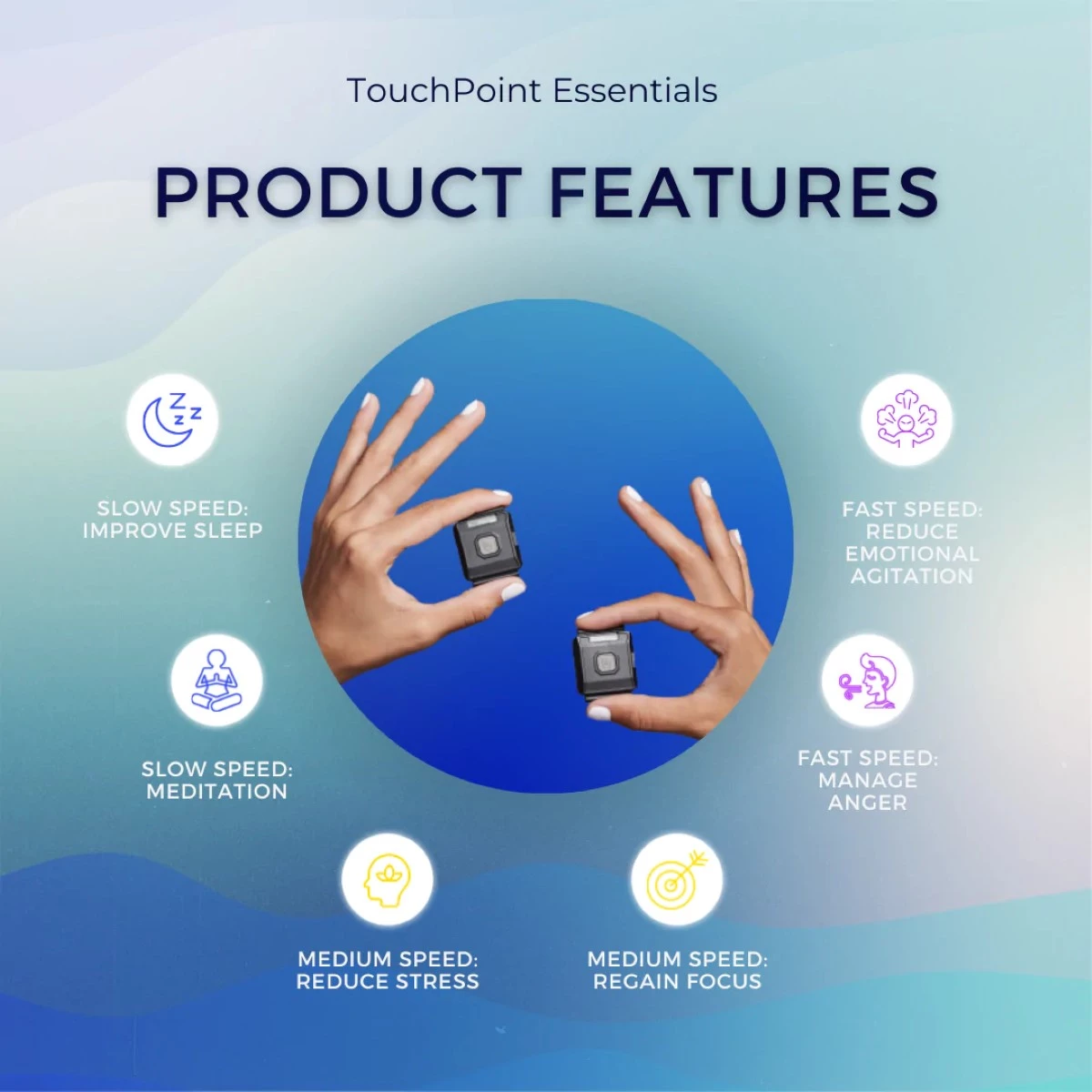
Two TouchPoints devices can be worn on your wrists, held, or clipped to clothing. TouchPoints uses Bi-Lateral Alternating Stimulation Tactile (BLAST) technology transferring alternating vibrations to alter the body?s Fight, Flight or Freeze (F3) response to stress and anxiety and to restore homeostatic nervous system functioning, allowing you to think clearly and experience calm. TouchPoints are wearable devices that provide fast relief from stress.
TouchPoints reduce stress by 70% in as few as 30 SECONDS.
Destress in 30 seconds? How?
When you`re stressed, the "fight or flight" part of your brain engages. TouchPoints shift you into the logical, rational part of your brain and allow you to think clearly and experience calm all within seconds. Having the ability to think rationally without an associated body sensation helps the brain create new neural pathways that are net positive, and this has a lasting effect on your brain.
Who can benefit from TouchPoints?
Anyone can benefit from the use of TouchPoints as they are an effective, accessible, and affordable solution to overcoming stress, anxiety, focus issues, enhance performance and sleep. TouchPoints have also been reported to help cope with conditions such as Parkinson's, Autism, ADHD. Using TouchPoints? for as little as 5 minutes a day results in improved focus and increased performance.
<iframe width="560" height="315" src="https://www.youtube.com/embed/cnVCrFlFC3A" frameborder="0" allow="accelerometer; autoplay; encrypted-media; gyroscope; picture-in-picture" allowfullscreen></iframe>
TouchPoints are embedded with BLAST technology. BLAST stands for bilateral alternating stimulation - tactile. This is our patent-pending technology derived from the most successful form of treatment for post-traumatic stress disorder (PTSD).
- Delivers Stimulation to Restore Calm: Using gentle, haptic microvibrations called BLAST (bilateral alternating stimulation tactile), TouchPoints alter the brain`s decision about the stress switch and help restore calm.
- Reduces Body Sensation: The physical stress responses (stomach aches, headaches, etc.) are reduced or alleviated.
- Strengthens New Neural Connections: The brain`s ability to restore calm creates new neural pathways associated with internal thoughts or external situations that are happening at the time- reducing future stress in similar situations.
How to wear your TouchPoints
One TouchPoint must be on each side of the body in order for the technology to work. Skin to skin contact is not necessary to feel the vibrations. Clips: Slide the included clips on the back of each TouchPoint and clip to clothing such as belt, pants, pockets, socks, or bra straps. Watchbands: Attach the included couplers to a TouchPoints watchband or any 22mm spring pin watchbands and wear on wrists or ankles. Other ways to wear them: Hold in your hands or slide in socks or pockets.
Using the TouchPoint BASIC
- Turn on one TouchPoint by pressing the on button until a green light appears.
- Choose your desired setting by pressing the button again. The blue light indicates the sleep setting, the yelllow light indicates the calm setting, and the purple light indicates the anger setting.
- Once you choose your desired setting, turn the other TouchPoint on by pressing the on button until a green light appears.
- Position the second TouchPoint close to the first, with the lights facing each other. The second TouchPoint will automatically pick up the setting of the first TouchPoint.
- Take the TouchPoints challenge to get a better understanding of your baseline when it comes to stress.
- To turn your TouchPoints off, hold the two devices away from each other and press the button on each TouchPoint until they both turn off.
The science of stress
The brain`s salience network detects and integrates sensory information from outside and inside the body to decide whether to turn on stress (sympathetic nervous system) or turn on calm (parasympathetic nervous system). If a potential threat is perceived via sight, sound, or even an internal negative thought, the brain signals the fight, flight, or freeze (F3) response and releases inflammatory stress hormones like cortisol and adrenaline. Important functions such as executive control, rational thinking, and empathy shut down in this mode and people can`t be at their best.
The result-Sleepless nights, irritability, poor decision making, poor performance, cravings, and a lack of focus. Most of us have overactive F3 responses - turning on the stress switch hundreds of times a day. F3 activation can lead to several physical and emotional problems and contributes to long-term side effects. Access to stress reduction in real-time, anytime, while you go about your day can significantly improve your life and can have implications on a global scale.
| Anwendungsbereich: | Sleep |
|---|
Login